Radiant Heating System Pressure Test
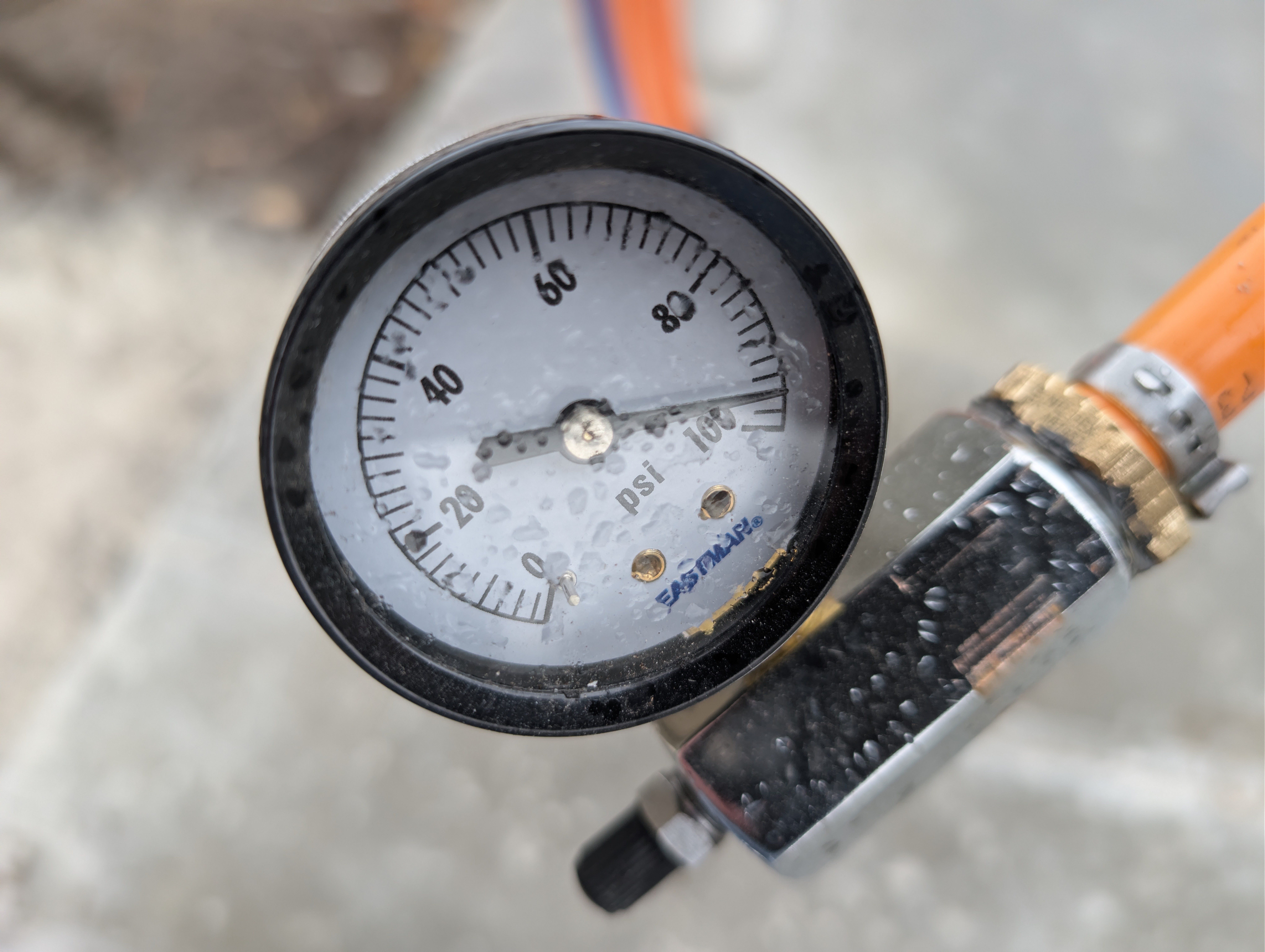
Photo Details
- Date: October 31, 2025
- Time: 1:51 PM EDT
- Weather: Partly cloudy to overcast, 48-52°F. Good conditions for finishing work.
- Phase: Foundation - Post-pour system testing
- Location: 309 E. 7th St., Clare, MI
- View: Close-up of pressure testing equipment
Description
This detailed close-up shows a pressure gauge connected to the embedded radiant floor heating system, documenting critical quality assurance testing of the PEX tubing that was installed beneath and within the concrete slab. Pressure testing verifies the integrity of the heating system after the concrete pour and ensures no damage occurred during construction.
Visible Elements
- Pressure Gauge:
- Analog dial pressure gauge
- Black housing with white face
- Scale appears to read 0-60 PSI
- Gauge shows reading (needle visible on dial)
- Professional test equipment
- Clear readable markings
- Brass fittings and connection hardware
- Connection Assembly:
- Orange PEX tubing connected to gauge
- Brass compression fittings visible
- Professional plumbing connections
- Valve control mechanism visible
- Multiple connection points in assembly
- Appears to be standard pressure test setup
- Background Context:
- Concrete slab surface visible (out of focus)
- Testing occurring on-site at foundation
- Photo taken during post-pour inspection
- Professional testing procedure documentation
Purpose and Significance
Pressure Testing of Radiant Floor Heating:
This test is a critical quality assurance step that verifies:
- System Integrity: No leaks in PEX tubing loops
- Construction Damage: Tubing survived concrete pour without punctures
- Connection Quality: All joints and manifold connections are secure
- Future Performance: System will function properly when activated
- Insurance/Warranty: Documentation for system warranty and performance guarantee
Standard Testing Practice:
- Typically performed after concrete curing begins
- System pressurized to test pressure (often 50-100 PSI)
- Held at pressure for extended period (several hours to days)
- Pressure drop indicates leak or system failure
- Must pass test before continuing construction
Radiant Heating System Recap
System embedded in this slab:
- PEX tubing loops throughout 960 sq ft floor area
- Connected to manifold system for zone control
- Designed for hydronic (water-based) heating
- Energy-efficient heating solution for garage/workshop
- Installed before concrete pour per design specifications
- Critical component of building’s HVAC strategy
Testing Timeline
Post-Pour Quality Assurance:
- October 30: Concrete poured with PEX embedded
- October 31 (26+ hours later): Pressure testing performed
- Testing confirms system survived pour intact
- Provides confidence for continued construction
This documentation proves:
- System was tested professionally
- Testing occurred at appropriate time in construction
- Quality assurance protocols were followed
- Foundation is ready for next construction phase
Technical Notes
Pressure Test Standards:
- PEX radiant systems typically tested at 50-100 PSI
- Test pressure held for 24-48 hours minimum
- Any pressure drop investigated immediately
- System must hold pressure before construction proceeds
- Testing repeated periodically during construction if needed
Why This Matters:
- Embedded PEX cannot be repaired after concrete cures
- Early detection of any issues is critical
- Passing pressure test confirms system viability
- Documentation required for building inspection
- Provides peace of mind for system investment
System Integration
This radiant heating system integrates with:
- Radiant heating design
- Overall HVAC strategy
- Thermal performance design
- Under-slab Creatherm insulation (2-inch thick)
- Future manifold and boiler/heat pump installation
Related Documents
- Radiant Slab Heating - System design and specifications
- HVAC Strategy - Heating and cooling strategy
- Initial Build - Construction documentation
- Timeline - Project timeline and milestones
- October 31 - Saw Cuts and Perimeter Work
- October 31 - Full Slab View